
I’ve moved my blogging to Substack!
Feel free to check out any of the content I have here, but also be sure to check out my newest content at Reckoning and Elevating What Works.

Death, Taxes, and Fancy Mustard
A healthy awareness of death is good. The back of my house overlooks a cemetery, and I’m grateful for this continual reminder of my eventual resting place.
Death is, of course, inevitable. So too, apparently, are taxes. A handful of men—including Benjamin Franklin and Daniel Defoe—wrote about the permanence and certainty of these two largely unpleasant parts of life a few hundred years ago.
And while reminding myself that I’ll die someday helps me prioritize my remaining life, and while reminding myself that taxes must be paid helps me stay on the right side of the law, there’s another saying that I find even more useful as I grow older.

A healthy awareness of death is good. The back of my house overlooks a cemetery, and I’m grateful for this continual reminder of my eventual resting place.
Death is, of course, inevitable. So too, apparently, are taxes. A handful of men—including Benjamin Franklin and Daniel Defoe—wrote about the permanence and certainty of these two largely unpleasant parts of life a few hundred years ago.
And while reminding myself that I’ll die someday helps me prioritize my remaining life, and while reminding myself that taxes must be paid helps me stay on the right side of the law, there’s another saying that I find even more useful as I grow older.
It’s a phrase that I first heard from Russ Roberts, host of the fascinating podcast EconTalk.
It’s one that should be emblazoned upon MBA diplomas and BMW titles.
Here it is: There’s always fancier mustard.
Another variant is “there’s always a bigger boat.”
The idea is that no matter how successful you become, no matter what you do, there will always be some material possession that exceeds what you have.
Got a house? Well, there’s a bigger one.
Got a new car? Your friend just bought the nicer model.
And so on and so on, for everything from lawnmowers to bespoke suits, ad infinitum.
Now, material possessions can be fun. I once heard Daniel Tosh (yes, the comedian) point out, “Have you ever seen a sad person on a WaveRunner?”
Well, no.
But when we allow material possessions to become an end, when acquisition and ownership become the goals themselves, all of that stuff ceases to become stuff that we own.
Instead, it all starts to own us. It starts slowly, with thoughts about what you want, then decisions, actions, and then ways of living.
Yet for me, simply remembering “there’s always fancier mustard” is a way to take it all less seriously. It’s a way to remember that the race for more or the race “to the top” is a fool’s errand. You’ll never get there, because “there” doesn’t exist.
By all means, work hard, strive for greatness, get an MBA and a BMW, make a ton of money if that’s what you want to do. There’s nothing intrinsically harmful in that. But along the way, remember that it’s all fleeting. What really matters is living a life full of meaning and purpose, one that enriches others through generosity, gratitude, and selfless interaction.
It’s no mistake that I’m thinking about this after having recently moved into my current house—the one with a fabulous view of a cemetery. The house is a little bigger than my prior one, and it has some neat features that the other one didn’t have.
Yet in this life of houses, cars, and careers, I'm finding that it’s increasingly important to remember that there’s always fancier mustard.
At the same time, there’s also very good mustard.
And you know what? Very good mustard is still very good.
Find this thought provoking? Leave a comment, like and share!
About Ben Baran
Ben Baran, Ph.D., is probably one of the few people in the world who is equally comfortable in a university classroom, a corporate boardroom and in full body armor carrying a U.S. government-issued M4 assault rifle. Visit: www.benbaran.com.

Why Gratitude is Smart Business for Leaders
One of the most prominent experiences I’ve had as an adult was the year I spent in Afghanistan, where I advised the Afghan National Police in 2013.
And one of the biggest reasons why it was a prominent experience is that it gave me a fresh perspective and sense of how good my life was in America. Being around poverty and people who had live through various levels of armed conflict for the past three decades has a way of making your “problems” seem a little less consequential. It makes you grateful for what you have.
But it doesn’t take a trip to Afghanistan to develop a sense of gratitude. In fact, I’ve come to realize how gratitude is a daily choice: You must
One of the most prominent experiences I’ve had as an adult was the year I spent in Afghanistan, where I advised the Afghan National Police in 2013.
And one of the biggest reasons why it was a prominent experience is that it gave me a fresh perspective and sense of how good my life was in America. Being around poverty and people who had lived through various levels of armed conflict for the past three decades has a way of making your “problems” seem a little less consequential. It makes you grateful for what you have.
But it doesn’t take a trip to Afghanistan to develop a sense of gratitude. In fact, I’ve come to realize how gratitude is a daily choice: You must consciously decide to be thankful, or you’ll quickly become complacent and focus only on what’s not going well in your life. Furthermore, there’s a difference between (a) feeling grateful for what you have in life overall and (b) expressing gratitude to others for something they’ve done.
While feeling grateful is intrinsically beneficial in boosting our positive outlook on life, the latter—expressing thanks to other people—is a small-yet-powerful way in which we can influence the people we lead or the people with whom we work.
And what’s more, thanking people who work for us or work with us is smart business.
Why?

Because when we thank other people for what they do, they’re more likely to feel socially valued. They’re also more likely to help us again and perform other, valuable social behaviors such as helping each other, talking positively about the organization, being polite and other critical tendencies that make teams and organizations run well.
So this holiday season, instead of or in addition to—hey, I’m not judging—overeating and braving the throngs of retail deal-seekers, set a goal of thanking the people around you at work. And when you do, consider a few of the following:
- Be sincere. This isn’t about manipulating people, and empty praise won’t work well very long anyway. People can often tell if you’re not genuine.
- Be specific. When thanking someone, describe to them the situation, what he or she actually did and the impact it had on you or the team. That way, the person can know exactly what behavior you noticed and appreciated. This will also help ensure that you’re thanking people for actions that truly deserve thanks.
- Be timely. If someone does something praiseworthy, tell him or her about it right away. It’ll mean more then than it will if you wait six months to mention it in a performance review or awards ceremony.
One of the best parts of expressing thanks to those around us is that it’s free. All it takes is some intentional effort and a sense of sincere appreciation.
Find this thought provoking? Leave a comment, like and share!
About Ben Baran
Ben Baran, Ph.D., is probably one of the few people in the world who is equally comfortable in a university classroom, a corporate boardroom and in full body armor carrying a U.S. government-issued M4 assault rifle. Visit: www.benbaran.com.

You Already Won the Lottery
A few weeks ago, I was discussing the topic of stress and well-being with my students in class. Our focus was on the importance of monitoring your well-being and managing your stress when you’re in a leadership position. Being a manager and having to get work done through a team is tough work, and it’s often full of stressors which, left unchecked, can take a toll on the manager.
That toll can include negative outcomes such as:
- Irritability,
- Reduced productivity,
- Burnout
- And a host of physical symptoms, from higher blood pressure to weight gain.
So it’s critical for managers of all levels to take care of themselves, both mentally and physically.
As the class went on, I discussed the importance of self-care for managers and how it can include many techniques, but one that I find particularly interesting is something that’s free and relatively easy. That technique?
It’s

A few weeks ago, I was discussing the topic of stress and well-being with my students in class. Our focus was on the importance of monitoring your well-being and managing your stress when you’re in a leadership position. Being a manager and having to get work done through a team is tough work, and it’s often full of stressors which, left unchecked, can take a toll on the manager.
That toll can include negative outcomes such as:
- Irritability,
- Reduced productivity,
- Burnout
- And a host of physical symptoms, from higher blood pressure to weight gain.
So it’s critical for managers of all levels to take care of themselves, both mentally and physically.
As the class went on, I discussed the importance of self-care for managers and how it can include many techniques, but one that I find particularly interesting is something that’s free and relatively easy. That technique?
It’s gratitude.
It turns out that gratitude has a number of beneficial outcomes. It helps us build productive social relationships, and it seems to protect us from stress and depression. (See this report of two longitudinal studies on the topic.)
And overall, being grateful for the positive things we have in life is strongly linked to well-being.
Given this evidence regarding the role of gratitude, I took a moment in class to encourage gratitude.
“Take out a piece of paper,” I said, “and write down as many things as you can think of for which you are grateful in your life.”
Some people started writing right away; others froze motionless. A few others looked at me quizzically, as if to suggest, “I haven’t really done anything in my life yet, so what’s there to be so happy about?”
As they started this exercise, I looked at them all and thought about their situations and how it compares with millions of other people’s situations, either in the United States or around the world, particularly in war-torn or developing countries I’ve visited.
And then I said, “You are sitting in a college classroom in the United States of America. You have already won the lottery.”
Those who weren’t already busy creating their gratitude list now at least had a place to start.
And so, for the rest of us, what’s the implication? Well, you, too, have already won the lottery. You’re literate (almost 16 percent of adults in the world aren’t) and you’re part of the 40 percent of the world that currently has an internet connection. That’s pretty good, just to start. And beyond that, count yourself among a much smaller, even more fortunate group if you (1) live in relative safety, (2) have access to clean drinking water and (3) have reasonable access to health and dental care. That’s not even considering your education, your job-related skills, your valued relationships and numerous other aspects of your life that truly set you apart from many in the world.
For whatever reason, it’s easy to think about what we don’t have. But that’s unproductive. It’s only going to make you feel more stressed and lower your well-being.
Instead, take a few minutes every day and think about your gratitude list. Even better, write them down in a gratitude journal.
Because if you do, I’m fairly certain you’ll be happier and less stressed. And that’s yet another thing for which—you guessed it—you can be grateful.
Find this thought provoking? Leave a comment, like and share!
About Ben Baran
Ben Baran, Ph.D., is probably one of the few people in the world who is equally comfortable in a university classroom, a corporate boardroom and in full body armor carrying a U.S. government-issued M4 assault rifle. Visit: www.benbaran.com.
On Gratitude, Agility and Career Transitions
When I was a teenager, I thought I had it all figured out: My life and career would be a logical series of steps and accomplishments. I’d go to college, earn an officer’s commission in the U.S. Navy, see the world. Then, I’d probably go to law school and enjoy another set of logical steps of accomplishments toward “success” in the civilian world.
Reality, of course, is different.
Life—and careers—are often full of twists and turns, punctuated by triumphs and failures. Some of those ups and downs are big and public, most are

When I was a teenager, I thought I had it all figured out: My life and career would be a logical series of steps and accomplishments. I’d go to college, earn an officer’s commission in the U.S. Navy, see the world. Then, I’d probably go to law school and enjoy another set of logical steps of accomplishments toward “success” in the civilian world.
Reality, of course, is different.
Life—and careers—are often full of twists and turns, punctuated by triumphs and failures. Some of those ups and downs are big and public, most are small and private. It’s a journey that I’ve found to be best accomplished by a sense of agility, by being nimble and trying to make a positive difference in whatever opportunity arises.
In those early years, I never would have predicted that in the next two decades I would have:
- Spent my most rewarding tour of duty in the Navy as a reservist called back to active duty in the landlocked country of Afghanistan,
- Earned a master’s degree in industrial/organizational psychology and a Ph.D. in organizational science (I was a political science and communication studies double major as an undergraduate), or
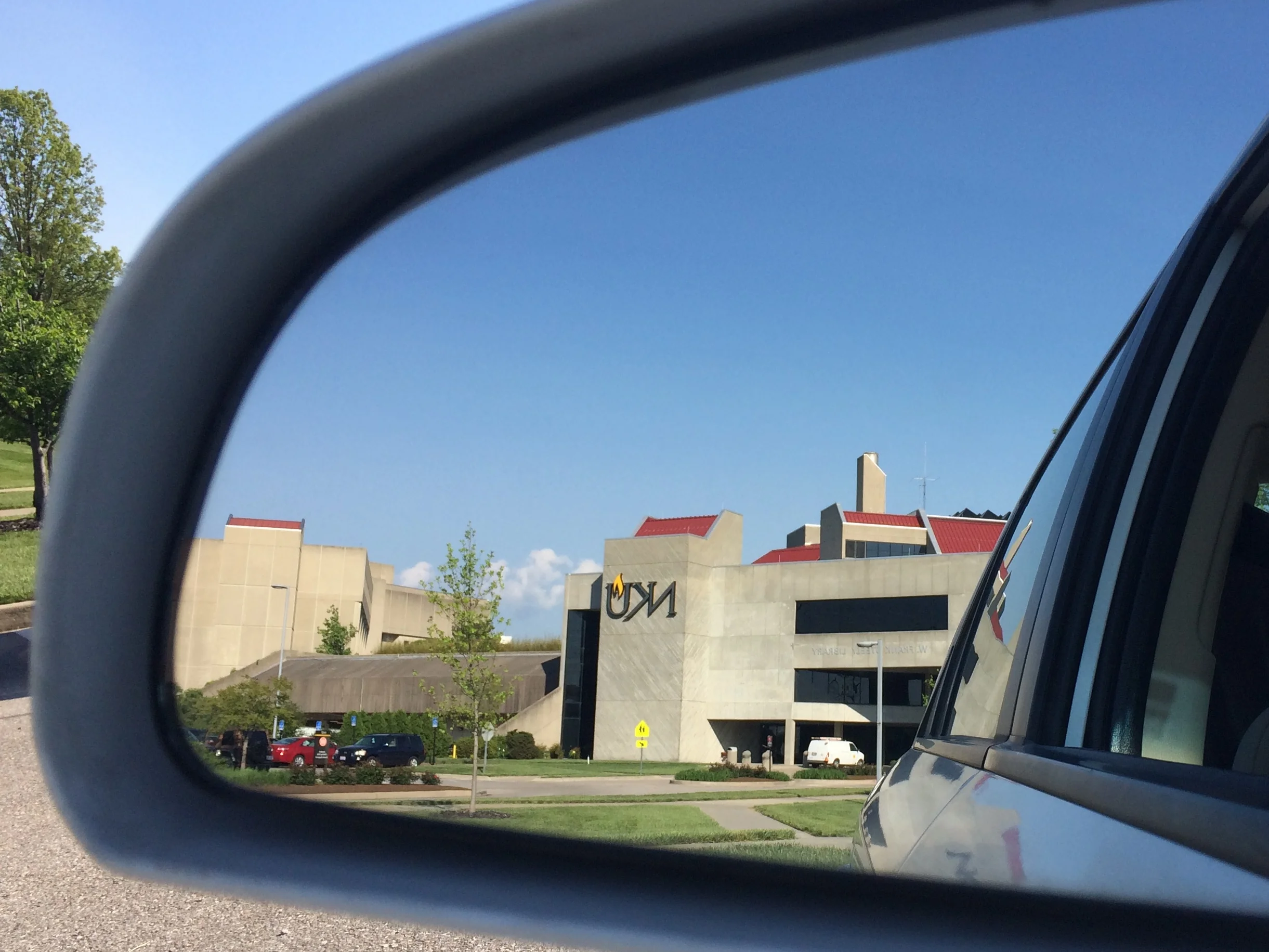
- Served for five years as a member of the faculty of the Haile/US Bank College of Business at Northern Kentucky University (NKU).
And it’s on this last point—my role as an assistant professor in the Department of Management at NKU—that I’d like to focus. Although I haven’t been on campus since the spring semester ended a few months ago, this week is technically my last one at NKU. I’m moving on to a tremendously exciting opportunity as a member of the faculty of the Monte Ahuja College of Business at Cleveland State University.
As I look back at the various roles I’ve held and organizations within which I’ve served, I’m reminded of how each experience taught me something new, making me simultaneously more confident and more humble than before. I’m also reminded of how so much of these experiences is shaped by special people and numerous small interactions that together have made me a better person.
Regarding NKU, then, I’d like to do something I haven’t done before, or at least in this way. I’d like to express my gratitude to those people—fellow professors, staff members, administrators, students, and other members of the campus community—who, more than anything, infused me with additional passion for higher education.
NKU is full of smart, hard-working and caring people. People who:
- Debate at length different ways to improve student learning,
- Teach with passion and celebrate when students succeed,
- Support each other’s efforts to innovate or try new things,
- Get to know each other personally and professionally, and
- Engage the community throughout Northern Kentucky and the greater Cincinnati area through research and learning through service.
I’m particularly grateful for all of the members of the Department of Management, the Executive Leadership and Organizational Change program and the Haile/US Bank College of Business at large for their personal and collective support of me, my development and my work.
Their support to me was unwavering, despite the odd challenges that I posed. For example, during my entire time at NKU, I lived 250 miles away. My department leaders understood this and helped when possible to make my teaching schedule work well given my situation. And when I told them that I’d have to leave for one year to serve in Afghanistan, their response was nothing short of total support and gratitude for my military service.
Thank you, NKU.
As I make this transition, I think an underlying lesson that I’ve learned is that gratitude and agility go hand-in-hand. To be agile as leaders or in our careers, we have to lean on those around us. We have to build and maintain relationships. We must be open and humble to learn from others.
And to keep all of that going for the long term, we must be grateful for the people we have the privilege to work alongside during this journey of life. All of you amazing NKU people will forever be my colleagues and friends.
Now as for my colleagues at Cleveland State University, I can hardly wait to learn from you and figure out ways to contribute positively through what we do together.
In the words of one of my former bosses, John Bland at The University of North Carolina at Charlotte, for whom I’m also grateful: Onward!
Find this thought provoking? Leave a comment, like and share!
About Ben Baran
Ben Baran, Ph.D., is probably one of the few people in the world who is equally comfortable in a university classroom, a corporate boardroom and in full body armor carrying a U.S. government-issued M4 assault rifle. Visit: www.benbaran.com.
The Power We All Have But Rarely Use
“Hey, you did a really great job in a tough situation. They’re lucky to have you.” I heard the gentleman in front of me say these two simple sentences to the United Airlines flight attendant as we exited the plane. It was a flight that normally takes about one hour, but it turned into more than three hours for all of us aboard the aircraft due to weather considerations. The flight attendant’s reaction to this unsolicited positive feedback, as you can imagine, was one of delight and appreciation.

“Hey, you did a really great job in a tough situation. They’re lucky to have you.” I heard the gentleman in front of me say these two simple sentences to the United Airlines flight attendant as we exited the plane. It was a flight that normally takes about one hour, but it turned into more than three hours for all of us aboard the aircraft due to weather considerations. The flight attendant’s reaction to this unsolicited positive feedback, as you can imagine, was one of delight and appreciation.
“I want you each to say something that you appreciate about everyone else on the team. Say it to them directly, not to me.” After a long day of working through a tough problem-solving session, my colleague Mike Richardson (who is also simply a brilliant, wonderful human being) pushed us all into a simple exercise that illuminated our individual strengths and collective appreciation.
“Let’s share our ‘flowers’ and ‘weeds’ for the past year. Let’s be grateful.” A few years ago, my father-in-law, Bill Hawke, started the tradition of sharing our annual highs and lows within the family during New Year’s Eve celebrations. We’ve all found this ritual to be one of our favorites, as it breathes new life into our plans for the future by situating those dreams within the context of where we’ve been.
Regardless of what happens to us—be it a rotten plane ride, a frustrating team session, personal health issues, or anything else—we always have the power to choose how we react. We always have power over our attitudes. And if we react by finding something positive and then sharing that positivity with others, we can exercise a powerful force not only in how we see the world but in how the people around us view themselves, us, and their circumstances.
Try using the power of gratitude and positivity intentionally this week. Find one thing that someone does that helps you, others, or your organization. Then, make a point to tell them that you noticed and that you’re grateful.
I can guarantee that their reaction—you guessed it—will also be one of gratitude.