
I’ve moved my blogging to Substack!
Feel free to check out any of the content I have here, but also be sure to check out my newest content at Reckoning and Elevating What Works.

What Ohio Manufacturers are Doing to Address Talent Needs
On Nov. 1, 2018, about 450 people from manufacturing, education, the public sector, and other organizations at the intersection of workforce matters and the manufacturing industry met in Columbus, Ohio, at the Ohio Manufacturers’ Workforce Summit 2018.

On Nov. 1, 2018, about 450 people from manufacturing, education, the public sector, and other organizations at the intersection of workforce matters and the manufacturing industry met in Columbus, Ohio, at the Ohio Manufacturers’ Workforce Summit 2018.
The daylong event, organized by The Ohio Manufacturers’ Association (OMA), featured speakers and panelists who discussed best practices, lessons learned, and other tools or initiatives being used by manufacturing companies and their partners to develop and attract the talent they need.

This was my first time at such an event. I chose to attend this year due to my roles as both a business professor at Cleveland State University and as a co-founder and principal of Indigo Anchor, a management consulting firm with a number of manufacturers as clients. Many of my clients have shared with me their struggles with finding the talent they need for their companies. And as a professor in manufacturing-centric Northeast Ohio, I hear similar concerns from both executives and mid-career professionals in my graduate business classes.
Below is a summary of what I heard and learned during the Summit, along with my grateful recognition of those who contributed to the event as speakers or panelists.
Eric Burkland, president of The OMA, began the day with opening remarks focused on the OMA Workforce Roadmap. This framework has four components: (1) sector leadership and leadership capacity building, (2) advocacy at both the state and federal levels with regard to manufacturing issues, (3) marketing with regard to manufacturing as a career, and (4) education innovation to strengthen the manufacturing talent pipeline.
Burkland highlighted MakingOhio.com, an OMA initiative designed to provide information about manufacturing jobs and career pathways. Such efforts, Burkland noted, are central to Ohio’s economic strength overall given that manufacturing is the largest industry sector in the state, employing one in every 10 Ohioans.
Key take-away point 1: Strong manufacturing equals a strong Ohio. Addressing talent needs in manufacturing benefits from a collaborative approach; an example of that is the initiative led by The OMA.
Next, Scot McLemore, manager of talent acquisition and deployment at Honda North America Inc., moderated a session titled, “Industry-Driven Sector Partnerships: A Proven Workforce Model.” The session featured four panelists: Shawn Hendrix, president at Nissen Chemitec America Inc.; Amy Meyer, vice president of corporate development at Rhinestahl AMG; and Kip Winzeler, chief operating officer at Altenloh Brink & Co. US Inc./Trufast.
A key theme that emerged during this session is the need for manufacturers to work together to develop their workforce, particularly with regard to the future talent and the pipeline that supports it.
“We are all struggling with this labor shortage,” said Hendrix. “It’s motivating to meet with educators … we just need to clearly communicate what our needs are.”
“The people are there … the issue is the pipeline,” said Brigham.
Winzeler highlighted how sector partnerships must be both geography and community-driven. Furthermore, such efforts “must be a long-term game.” In terms of timeline, Hendrix suggested that manufacturers and their talent-pipeline partners should realize that they might not reap the full benefits of their efforts until eight to 10 years after beginning any partnerships.
Both Meyer and Brigham discussed how building a talent pipeline in manufacturing must be a holistic effort. For example, noted Meyer, manufacturing jobs are “much more than labor,” and include functions such as accounting, human resources, and more.
“We’ve got to start recruiting to a career opportunity, not just jobs,” said Brigham. He and other panelists noted how recruiting for manufacturing jobs involves educating not only potential job candidates about the manufacturing industry, but also including their parents in the conversation. Such educational efforts can help to correct common misunderstandings about manufacturing. For example, modern manufacturing is often very clean and technical—not dirty and monotonous.
Key take-away point 2: Ensuring sufficient talent for manufacturing requires a long-term focus in partnerships with educators, an educational campaign about modern manufacturing for both job candidates and their families, and a collaborative approach among manufacturers—even if they are otherwise competitors.
The next session, ”Innovative New Tools for Partnerships,” began with a presentation by Lisa Morales Cook, senior vice president for brand planning at Fahlgren Mortine. Her discussion focused upon the results of a study that sought to explore how to build the workforce pipeline for the next generation of manufacturers.
Key findings from the study included:
Perceptions of manufacturing are generally favorable, but they lack clarity. Some people perceive manufacturing as a “dirty, dark, and dangerous place to work,” which presents a barrier to recruiting efforts.
Messages about pay, benefits, and job stability are well-received by potential job applicants. The relatively high pay for manufacturing—which in Ohio in 2015 averaged $81,000 per year compared with $63,000 per year for other jobs—generally surprised study participants.
Job seekers today research opportunities considerably, suggesting that employers need to provide detailed information about jobs and the organization overall. They will want to know about the career paths, job types, time it might take to earn certain salaries, and more.
The manufacturing workplace is somewhat mysterious for today’s job seekers. The modern manufacturing environment is more often one in which 1,000 people are doing 1,000 different jobs—not one in which there are 1,000 people doing the same job. As such, the variety of job types and skills in manufacturing needs more exposure.
Finally, manufacturers would benefit from clarifying leadership and growth opportunities in their organizations.
Many of these findings connect with the notion of an employer brand and the idea that orienting new employees starts in the pre-hire phase.
Key take-away point 3: Manufacturers must actively work to change perceptions about what work “looks like” in their organizations if they are to recruit talent effectively.
Gerry Hanley, assistant vice chancellor for academic technology services at California State University, Office of the Chancellor, then shared how The OMA has partnered with Skills Commons to provide free training resources for their employees and workforce partners.
Such resources include courses on becoming an effective instructor, which can help current experts teach transfer their knowledge and skills to others. Others include training materials for specific occupations, soft-skills training, and recruitment resources.
Key take-away point 4: Before paying for manufacturing-specific training, research and evaluate how free online courses may meet your needs.
Following lunch, JobsOhio team members Cheryl Hay, director of project talent acquisition, and Lenee’ Pezzano manager of strategic talent delivery, presented in a session titled, “Connecting Economic Development Strategies with Industry Sector Partnerships.”
One key for successful development of a talent pipeline in manufacturing, Hay noted, was to find, prescreen, and train talent—and to consider these issues before the need for talent is urgent. Echoing ideas from earlier in the day, she also discussed how marketing is important to help drive excitement about manufacturing as a career.
Pezzano added by outlining several elements that could be considered best practices when approaching sector partnerships. These include using data (such as research available from the Bureau of Labor Statistics and other studies) to inform approaches, having an industry intermediary to help guide the process, developing concepts first before trying to get funding, and ensuring that all program content is industry-informed and experiential.
Key take-away point 5: Manufacturers must think ahead regarding the talent they will need in the future—not just the talent they need right now. For example, many companies would love to have highly experienced computer numeric controlled (CNC) machinists available to hire right now. That’s understandable and important, but manufacturers should also be thinking about how they can support the development of, for example, more CNC machinists in the future—and how they might acquire a wide variety of skilled labor that they might need in a year to several years from now. Such efforts should stem from the organization’s strategy, and developing partnerships is an important component in building such a talent pipeline.
The final session I attended—unfortunately, I had to leave prior to the final segment in order to make it back to Cleveland State University to teach in the evening—was a breakout session on “Manufacturers’ Role in Training Program Improvement.”
This session featured Mara Lynne Banfield, director of curriculum and instruction at Mahoning County Career and Technical Center; Matt Joing, plant manager at Butech Bliss and vice president of Mahoning Valley Manufacturers Coalition; and Rebecca Kusner, founder of R4 Workforce.
In the session, the presenters shared various factors related to how manufacturers can contribute to the quality of training programs in an effort to better equip their current or future talent. Examples of such factors included integrating the skills needed in the professional manufacturing environment into the academic setting, developing a deep understanding of the skills needed for employees to be successful, and combining training efforts with a nuanced understanding of what different businesses need.
Key take-away point 6: Manufacturers should work with any training partners to conduct a careful diagnosis of their needs, which should include an understanding of the knowledge, skills, abilities, and other characteristics needed in the job.
To summarize, The OMA Workforce Summit 2018 provided a wealth of insight regarding many elements of the talent pipeline for manufacturers in Ohio. Many of these would likely apply beyond Ohio, and I hope that some of these ideas may spark additional thought and insight among those in manufacturing who are also looking for ways to deal with their labor shortages. Second, thank you to those who contributed to the event as speakers or panelists.
If you attended this event and would like to add to the conversation—or if you simply have additional insights to share—please leave a comment below.
Join the Movement
Our vision is to create—through The Indigo Anchor Manufacturing Excellence Study™—a comprehensive network of manufacturing business leaders and researchers united by our common interest. By participating, you’ll have access to the latest manufacturing insights, giving you a competitive edge. Less guesswork, more knowledge. And that gives you both speed and confidence. Get involved today by taking a quick (about 15 minutes) online survey. In that survey, we ask about your perspective regarding a variety of market trends and your organization. CLICK HERE to take the survey.
About Indigo Anchor
Indigo Anchor is a management consulting firm that improves engineering teams within manufacturing environments, resulting in faster engineering, an improved company overall, and less frustration. With a focus on people, processes, and tools, Indigo Anchor helps turn engineering teams into a competitive advantage. The firm has more than 40 years of combined business and military leadership experience, which it applies to the top priorities of its clients. For more information, visit: www.indigoanchor.com
About Ben Baran
Ben Baran, Ph.D., is probably one of the few people in the world who is equally comfortable in a university classroom, a military uniform, or in a corporate boardroom advising top management teams. A co-founder and principal at the consulting firm Indigo Anchor, he's also an award-winning business professor and published scholar at Cleveland State University and a commander in the U.S. Navy Reserve. He regularly consults leaders and organizations across a wide range of sectors and industries. Visit: www.indigoanchor.com and www.benbaran.com.
Advanced Manufacturing and Two Ways to Reward Agility
Modern factory floors fascinate me. There’s something about the clang and whoosh of the myriad machines, the hum of an overhead crane gliding along its tracks, the intricate yellow lines demarcating where it’s safe to walk and the ambiguous chemical aroma punctuating the air with hints of solvents or grease or paint or maybe all of them mixed together.
There’s something about the delicate dance of interdependent and interconnected parts and processes that somehow—amazingly—produce that which we and the entire world outside the factory walls often takes for granted.
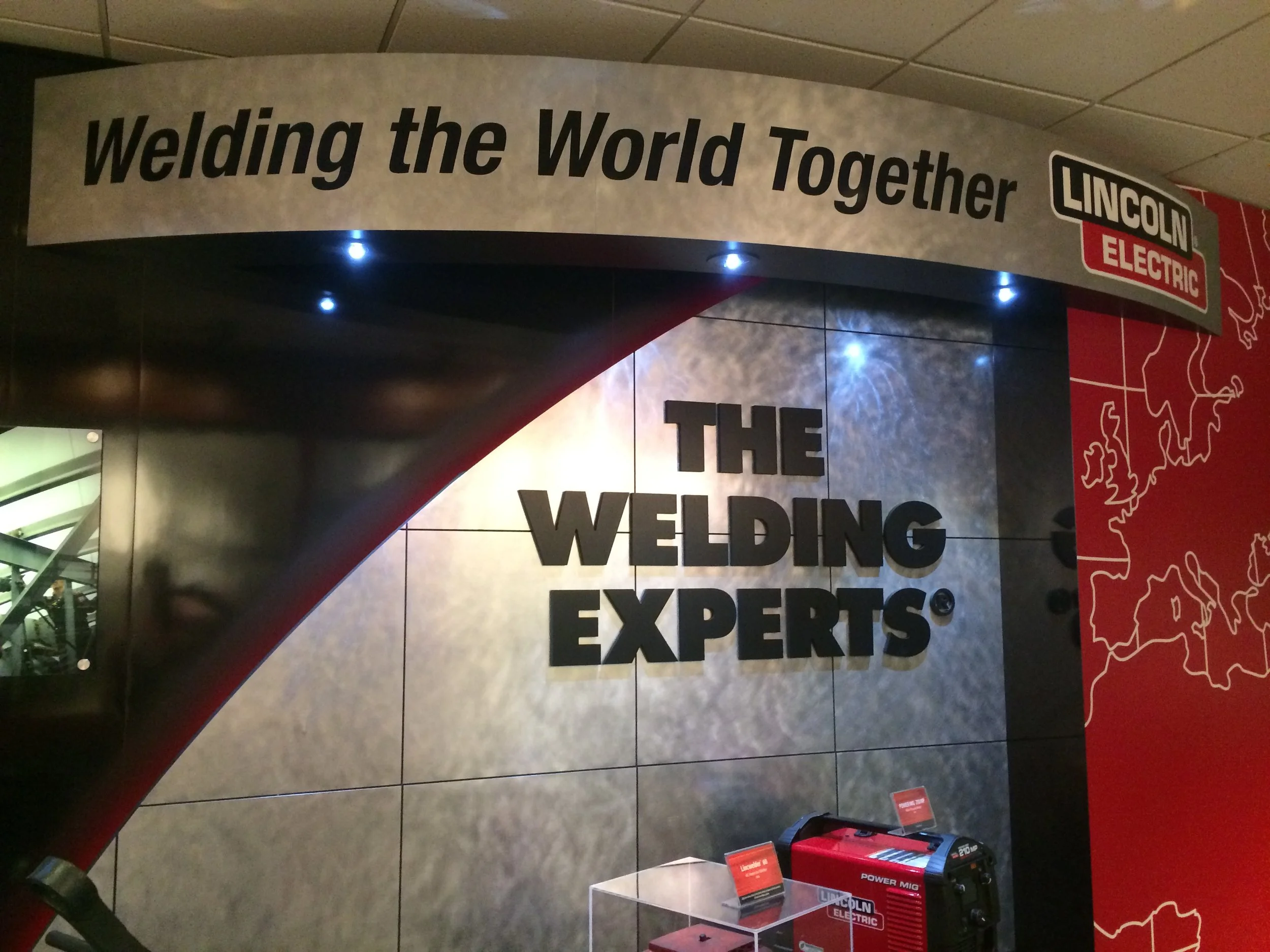
When I’m in a factory, I still get the same sense of wonder and curiosity that I had when I was 8 or 9 years old, touring the Rohm and Haas plant in Louisville, Ky. And this week, I had the opportunity to visit one of Cleveland’s (and Ohio’s, for that matter) oldest and largest manufacturing firms: Lincoln Electric.

Modern factory floors fascinate me. There’s something about the clang and whoosh of the myriad machines, the hum of an overhead crane gliding along its tracks, the intricate yellow lines demarcating where it’s safe to walk and the ambiguous chemical aroma punctuating the air with hints of solvents or grease or paint or maybe all of them mixed together.
There’s something about the delicate dance of interdependent and interconnected parts and processes that somehow—amazingly—produce that which we and the entire world outside the factory walls often takes for granted.
When I’m in a factory, I still get the same sense of wonder and curiosity that I had when I was 8 or 9 years old, touring the Rohm and Haas plant in Louisville, Ky. And this week, I had the opportunity to visit one of Cleveland’s (and Ohio’s, for that matter) oldest and largest manufacturing firms: Lincoln Electric.

Although it’s old (founded in 1895) and large (about 10,000 total employees, $2.5 billion in revenue), Lincoln Electric has a distinct track record of innovative practices within the realms of strategy execution and incentive systems designed to channel its employees' motivation and effort.
It’s not surprising that it has long served as a case study for Harvard Business School.
But what I found most intriguing was how Lincoln Electric has structured agility—the capability to sense and respond to change—into two distinct parts of its measurement and evaluation systems.
First, Lincoln Electric’s managers systematically assess and rate their employees’ flexibility. These ratings—along with ratings on dimensions of teamwork and dependability, safety, quality and contributing to improvement efforts by providing recommendations—form what’s known as the employee’s “report card.” And this report card plays an important role in determining the employees’ bonuses, so it’s meaningful.
The feature of Lincoln Electric’s incentive system that’s probably most well-known is its piecework pay structure. For many workers, that means they get paid based upon how many items they actually produce—no hourly wage, no salary. This creates a powerful motive for workers to work quickly and efficiently. To ensure quality, mistakes matter. If an item fails any aspect of a quality check, the same employee (or group of employees) who put it together must fix the problem.
Many aspects of this system are intriguing, but what I like about the flexibility component of the report card at Lincoln Electric is that it’s strategic in nature. That’s because Lincoln Electric is a low-volume, high-mix manufacturer. Simply put, they make many different types of products in quantities that often vary. This has allowed them to meet their customers’ often-diverse needs, but it also means that they need their employees to become proficient in more than one area of expertise. They need their employees to be willing and able to jump in and help in other areas if needed. This is critical to maintaining their business model, and it’s critical for employee behavior. As such, including this type of flexibility (which I’d argue is closer to agility) is part of the evaluation and incentive structure sends a clear signal to their employees in terms of what’s expected and rewarded.
Second, Lincoln Electric’s commitment to agility extends to its supply chain. Not surprisingly, to support its diverse array of products, Lincoln Electric depends heavily on high-quality materials. And because their production volume is often variable, they depend not only on having high-quality materials, but also upon having those materials available in variable quantities. As such, Lincoln Electric requires flexibility from its suppliers.
And just like it does with its employees, Lincoln Electric systematically assesses the flexibility of its suppliers. This occurs as part of periodic evaluations in which its supply-chain leaders rate each supplier on a number of dimensions as part of an overall scorecard. Furthermore, Lincoln Electric works with its suppliers to ensure they have contingency plans in place to help them manage the unexpected—because that which affects the suppliers will certainly affect Lincoln Electric.
There’s surely much more detail and nuance involved in both Lincon Electric’s commitment to employee and supply-chain agility, but I think one big lesson that applies to organizations everywhere is this:
If you truly value an aspect of behavior, it’s not enough to talk about it. You must take the next step and measure it—and reward it.
This sounds simple enough, but I’m continually surprised by firms that hope for certain outcomes or changes in behavior yet are unwilling to systematically measure and incentivize those very same outcomes or behaviors.
Many companies claim to value agility, flexibility, responsiveness or nimbleness. But never forget—hope and expectations and slogans and posters and speeches won’t necessarily influence what people actually do. To create alignment between behaviors and strategy, the right incentives must exist.
Find this thought provoking? Leave a comment, like and share!
About Ben Baran
Ben Baran, Ph.D., is probably one of the few people in the world who is equally comfortable in a university classroom, a corporate boardroom and in full body armor carrying a U.S. government-issued M4 assault rifle. Visit: www.benbaran.com.