
I’ve moved my blogging to Substack!
Feel free to check out any of the content I have here, but also be sure to check out my newest content at Reckoning and Elevating What Works.

Leading Collaboration and Disaster Response
Rescue and recovery efforts related to Hurricane Harvey, which struck the Texas coast on Aug. 26, are likely testing the ability of numerous organizations to coordinate or collaborate effectively.
People within all of these organizations—including the U.S. Coast Guard, the Federal Emergency Management Agency, Department of Homeland Security, the National Guard, state and local law enforcement, the fire service, and many others—have undoubtedly been working around the clock to help those in need. Like those professionals whom I’ve had the pleasure to know in these and similar areas of public service, these people are selfless, hardworking, and well-intentioned.
With any massive event like this, however, there are

Photo by Army National Guard Sgt. 1st Class Malcolm McClendon. The appearance of U.S. Department of Defense (DoD) visual information does not imply or constitute DoD endorsement.
Rescue and recovery efforts related to Hurricane Harvey, which struck the Texas coast on Aug. 26, are likely testing the ability of numerous organizations to coordinate or collaborate effectively.
People within all of these organizations—including the U.S. Coast Guard, the Federal Emergency Management Agency, Department of Homeland Security, the National Guard, state and local law enforcement, the fire service, and many others—have undoubtedly been working around the clock to help those in need. Like those professionals whom I’ve had the pleasure to know in these and similar areas of public service, these people are selfless, hardworking, and well-intentioned.

Photo by Coast Guard Petty Officer 3rd Class Brandon Giles. The appearance of U.S. Department of Defense (DoD) visual information does not imply or constitute DoD endorsement.
With any massive event like this, however, there are likely to be some frustrating issues related to how the various organizations interact. Who does what? Who is responsible for whom? How are resources shared—or not? Friction is almost certainly guaranteed due to the turbulent nature of the situation.
Although such friction may not be totally avoidable, we do seem to know a few things about organizations that helps us understand some of the factors that promote coordination and collaboration in these types of situations. Here are two of those factors:
- Deference to expertise. In addition to applying at the individual level—for example, giving authority to people in teams based upon their level of expertise on a given topic—we can think about this idea with regard to organizations overall. Some organizations are better equipped and trained to do certain tasks than others. Instead of fighting over decision-making authority, leaders within various organizations that are attempting to collaborate should defer such authority to organizations that have such expertise. For example, I could be wrong, but for matters related to water-borne rescue, the U.S. Coast Guard probably should be driving the show.
- Organizational identity. In order for deference to expertise to work, an organization must have a clear idea about what it does well and what it does not do well. This requires a high level of intellectual honesty and humility among those who run such organizations. In planning and coordination meetings, for example, representatives from various organizations must be knowledgeable about not only what their organization can provide better than others—but also be willing to concede that other organizations have their own specific areas of expertise.

Photo by Air National Guard Master Sgt. Matt Hecht. The appearance of U.S. Department of Defense (DoD) visual information does not imply or constitute DoD endorsement.
Leaders at all levels within responding organizations would be well served to keep these ideas in mind and act accordingly. I’m sure many of them already are doing so.
But as the work in Houston and surrounding areas goes on—not for weeks and months, but likely years—these are principles that will continue to apply.
These are tough times for those affected by Harvey. And Hurricane Irma is currently building strength in the Atlantic. If you’re fortunate like me to not be directly affected by these events, consider donating to a charity that is helping. Here’s a list of such groups from the New York Times.
About Ben Baran
Ben Baran, Ph.D., is probably one of the few people in the world who is equally comfortable in a university classroom, a corporate boardroom and in full body armor carrying a U.S. government-issued M4 assault rifle. Visit: www.benbaran.com.
Ben is also the author of the e-book, The Navy’s 11: Reflections and tips for leaders everywhere based upon the U.S. Navy’s Leadership Principles. It’s full of ...

- Leadership guidance, based upon the U.S. Navy's Leadership Principles, which have been used to create and sustain the greatest navy known to humankind;
- Real-world examples, based upon my nearly 20 years of experience with the U.S. Navy and a decade of academic research combined with business consulting;
- Actionable tips, meant to help you implement the leadership principles in your daily life and work; and
- Much more!
Click here to get your FREE copy today.

Surviving The Next Catastrophe by Reducing Vulnerabilities
If the renowned organizational sociologist Charles Perrow had a classic-rock theme song, it just might be “You Ain’t Seen Nothin’ Yet,” the 1974 hit song by Bachman Turner Overdrive. Let me explain. In his classic book, Normal Accidents: Living with High-Risk Technologies, Perrow discussed the numerous high-risk technologies that pervade modern life and the dangers they pose for society.
First published in 1984 with an updated version released in 1999, Normal Accidents presents an argument for the inevitability of large-scale disasters such as nuclear meltdowns, petrochemical-plant explosions, maritime accidents, and so forth.
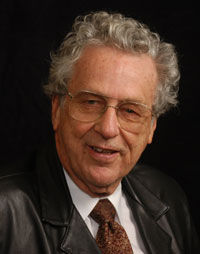
If the renowned organizational sociologist Charles Perrow had a classic-rock theme song, it just might be “You Ain’t Seen Nothin’ Yet,” the 1974 hit song by Bachman Turner Overdrive. Let me explain. In his classic book, Normal Accidents: Living with High-Risk Technologies, Perrow discussed the numerous high-risk technologies that pervade modern life and the dangers they pose for society.
First published in 1984 with an updated version released in 1999, Normal Accidents presents an argument for the inevitability of large-scale disasters such as nuclear meltdowns, petrochemical-plant explosions, maritime accidents, and so forth. These accidents are inevitable, or “normal,” because they stem from systems that have specific structural characteristics. Namely, these systems are interactively complex, meaning that different parts of the system are likely to work together in ways that produce unanticipated consequences. Secondly, these systems exhibit tight coupling, meaning that a single change in one part of the system will directly lead to changes in other parts of the system.
This means that over time disasters will become increasingly likely. In other words, you ain’t seen nothin’ yet.
In his 2007 bookThe Next Catastrophe: Reducing our Vulnerabilities to Natural, Industrial, and Terrorist Disasters, Perrow builds upon the themes presented in Normal Accidents while suggesting a few approaches toward limiting the havoc that such normal accidents will inevitably wreak upon society. In so doing, he also points out three more sources of vulnerability beyond interactive complexity and tight coupling. These three sources are all in the form of high concentrations of the following:
- Energy. In numerous locations around the United States, industrial storage facilities house vast quantities of explosive, toxic, and flammable substances. Because these storage facilities are concentrated in specific locations, an accident in any one of them would be much more disastrous than if storage occurred in smaller quantities at a greater number of separate sites.
- People. High population densities in risky areas make disasters in those locales catastrophic. For example, New Orleans is a vulnerable city—due to its geography and its proximity to high-risk industry. The fact that it is also high in population density makes it particularly vulnerable.
- Economic and political power. Perrow has a knack for drawing our attention to the role of power in organizations, and he argues here that mega-corporations and the political entities with which they interact wield so much power over very real aspects of our daily lives that any failure within them could pose serious risk. One example he cites is the pervasive nature of the Microsoft Windows operating system. If Windows failed—due to a massive computer virus, for example—catastrophic damage to business, government, and personal livelihood would likely result. Another example, although not addressed directly in the book, is the danger posed by financial institutions deemed “too big to fail” that we have witnessed in recent years.

To address these issues, Perrow argues that (a) government should implement wise regulations that limit these concentrations and (b) that leaders should focus on these concentrations as real threats instead of being distracted by other less-likely sources of disaster. In essence, he suggests that the focus should be on “shrinking the targets.” For example, Perrow argues that political interests have overestimated the terrorism threat in the United States while underestimating the threats posed by industrial forces, such as the nuclear power industry.
Overall, Perrow presents a number of examples that suggest the three areas of concentration listed above are indeed sources of vulnerability. His approach toward shrinking those targets, however, appears to focus mostly on policy decisions rather than aspects of human behavior within organizations.
As such, The Next Catastrophe provides an interesting view of disaster and vulnerability at a macro level. Much like “watchdog” groups that illuminate concerns within government agencies and programs, Perrow has been shining a light on the dark side of organizations, business, and government for decades. And his suggestions, when coupled with other viewpoints at the micro level, may provide a way for us to avoid the ominous theme of “you ain’t seen nothin’ yet” that underscores his theories.