
I’ve moved my blogging to Substack!
Feel free to check out any of the content I have here, but also be sure to check out my newest content at Reckoning and Elevating What Works.

Can HR Drive High Reliability?
Positive thinking is sometimes overrated. In fact, too much positive thinking can be disastrous. While optimism can help people and organizations bounce back from tough times, when allowed to dominate the psyche during good times, it can blind us to the possibility of what could go wrong.
It’s important, periodically, to think creatively about potential doom.

Positive thinking is sometimes overrated. In fact, too much positive thinking can be disastrous. While optimism can help people and organizations bounce back from tough times, when allowed to dominate the psyche during good times, it can blind us to the possibility of what could go wrong.
It’s important, periodically, to think creatively about potential doom.
Such “preoccupation with failure” is one pattern of behavior that helps some organizations have far fewer accidents than we would expect given what they do. For example, plenty could go wrong in a nuclear power plant or aboard a naval aircraft carrier. But few errors devolve into disasters in either, in part because its people explicitly know what failure could look like and catch small problems before they become catastrophes.
These types of organizations are “high-reliability organizations,” and I think there’s something that human resources (HR) departments could learn from them.
In particular, what might happen if we tried to apply the five hallmarks of high reliability to HR practices? This is a topic that I addressed in “High-Reliability HR: Preparing the Organization for Catastrophes,” which appeared in the Winter 2016 issue of People & Strategy.
To summarize some of the key points of that article, consider the following five hallmarks of high reliability:
- Preoccupation with failure: What could go wrong?
- Reluctance to simplify interpretations: What’s the true cause?
- Sensitivity to operations: Are we in touch with the ground-level reality?
- Commitment to resilience: How do we recover?
- Deference to expertise: Who knows best?
I argue that HR could play a pivotal role in helping an organization adopt these principles. For example, HR could help with scenario planning based upon identified risks, developing leaders who promote a climate of healthy questioning, assisting with reporting and analyzing near misses, training employees on actions to take during catastrophes and implementing hiring practices that select employees with the specialized skills needed by the organization.
Some may say that HR has no place in disaster planning or emergency preparedness, suggesting that such efforts need to be solely under the purview of business continuity, security or risk management functions.
But shouldn’t HR be concerned holistically about the human side of the organization’s survival and success? Isn’t HR as a function positioned well to act as custodians of a culture that moves the organization toward high-reliability?
Or maybe we should go back to calling HR the “personnel” department.
Regardless, it’s worth it for us as HR professionals to liberate our thinking as we think about what the HR function is and how it contributes to the overall organization in the 21st Century. My full article on this topic applies the high-reliability HR framework to the topic of an active shooter on a college campus, and it’s meant to provoke a conversation about the potential role of HR in ensuring a secure enterprise.
To download the full article, click here.
Does HR have a role in helping the organization prepare for disasters and bounce back when they occur? Leave a comment below!
Find this thought provoking? Like and share!
About Ben Baran
Ben Baran, Ph.D., is probably one of the few people in the world who is equally comfortable in a university classroom, a corporate boardroom and in full body armor carrying a U.S. government-issued M4 assault rifle. Visit: www.benbaran.com.

Strike a match: Agile improvisation in the face of disaster
On August 5, 1949, a team of 15 smokejumpers parachuted into the Mann Gulch near the Missouri River in Montana to fight a fire that had started the previous day. At first appraisal, fighting the fire seemed a simple task. But thus began one of the worst disasters in the modern history of wildfire suppression in which all but two of the team members lost their lives.
Immortalized in Norman Maclean’s book Young Men and Fire[i], in the folk song Cold Missouri Waters by James Keelaghan and in famed organizational scholar Karl Weick’s scholarly analysis[ii], the incident is a tragic-yet-fascinating account of a team attempting to sense and respond to a rapidly evolving environment. It’s a story of improvisation, counter-intuitive action and collapsed team structures.
According to Maclean’s account, the team

"Playing with Matches" by Dennis Wilkinson is licensed under CC BY 2.0
On August 5, 1949, a team of 15 smokejumpers parachuted into the Mann Gulch near the Missouri River in Montana to fight a fire that had started the previous day. At first appraisal, fighting the fire seemed a simple task. But thus began one of the worst disasters in the modern history of wildfire suppression in which all but two of the team members lost their lives.
Immortalized in Norman Maclean’s book Young Men and Fire[i], in the folk song Cold Missouri Waters by James Keelaghan and in famed organizational scholar Karl Weick’s scholarly analysis[ii], the incident is a tragic-yet-fascinating account of a team attempting to sense and respond to a rapidly evolving environment. It’s a story of improvisation, counter-intuitive action and collapsed team structures.
According to Maclean’s account, the team was beginning to evaluate the fire and plan an attack when the team leader, Wagner Dodge, saw that the wildfire had breached the valley and was approaching their direction rapidly. Quickly, the situation devolved into an all-out race to a rocky area at the top of the ridge, with flames chasing them at a rate of approximately 610 feet per minute.
That’s when Dodge took two actions that both highlight extreme moments of agility.
- He ordered his men to drop their tools. Dodge realized that they needed to run faster if they were to have any chance of reaching the top, and that their heavy tools were slowing them down. But this is a strange order to give a group of experienced firefighters—it’s like telling a group of Marines to throw down their rifles.
- Moments later, he took out a match, struck it and threw it into the waist-high dry grass around him. As his own personal fire grew around him, he ordered his men to lie down with him in the area he scorched. None of them did.
Consider the magnitude of creativity Dodge displayed in these moments: (1) casting away his tools, the very physical representations of being a firefighter and (2) starting a fire and climbing into it, when the entire purpose of firefighting is to extinguish flames while avoiding direct contact if possible.
Dodge arose later from the ashes that had provided a barrier between him and the wall of flame that swept the hillside. He soon learned that only he and one other team member survived. All 13 others died.
This story has numerous lessons, one of which is the value of agile improvisation.
Dodge quickly realized that the environment had changed and took novel, dramatic steps to survive.
The story also highlights the value in continually sensing and monitoring one’s environment for subtle signs of danger. Such processes that support anticipating change involve the use of analytics, which is all about making sense of what’s going on, organizing that information and using it to respond appropriately.
How does an organization systematically sense and monitor its environment? We’ve found that it’s through consistently measuring what’s important from every corner of the system, gathering insights from employees across levels, functions and geographies. It’s about establishing an attitude of questioning assumptions and the status quo, making it OK for people to voice ideas and even dissent.
Agile organizations aren’t error-free.
They’re organizations that have embedded the ability to notice small deviations and deal with them quickly. And formal systems for sensing and monitoring set the foundation for such noticing to occur. Coupled with agile responses—like Dodge’s burning match—organizations can begin to thrive in spite of the turbulence around them.
References
[i] Norman Maclean, Young Men and Fire (Chicago: University of Chicago Press, 1993).
[ii] Karl E. Weick, “The Collapse of Sensemaking in Organizations: The Mann Gulch Disaster,” Administrative Science Quarterly 38, no. 4 (December 1993): 628, doi:10.2307/2393339.
About Ben Baran
Ben Baran, Ph.D., is probably one of the few people in the world who is equally comfortable in a university classroom, a corporate boardroom and in full body armor carrying a U.S. government-issued M4 assault rifle. Visit: www.benbaran.com.

Surviving The Next Catastrophe by Reducing Vulnerabilities
If the renowned organizational sociologist Charles Perrow had a classic-rock theme song, it just might be “You Ain’t Seen Nothin’ Yet,” the 1974 hit song by Bachman Turner Overdrive. Let me explain. In his classic book, Normal Accidents: Living with High-Risk Technologies, Perrow discussed the numerous high-risk technologies that pervade modern life and the dangers they pose for society.
First published in 1984 with an updated version released in 1999, Normal Accidents presents an argument for the inevitability of large-scale disasters such as nuclear meltdowns, petrochemical-plant explosions, maritime accidents, and so forth.
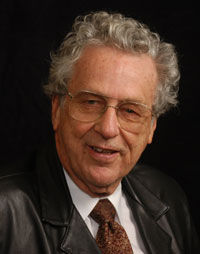
If the renowned organizational sociologist Charles Perrow had a classic-rock theme song, it just might be “You Ain’t Seen Nothin’ Yet,” the 1974 hit song by Bachman Turner Overdrive. Let me explain. In his classic book, Normal Accidents: Living with High-Risk Technologies, Perrow discussed the numerous high-risk technologies that pervade modern life and the dangers they pose for society.
First published in 1984 with an updated version released in 1999, Normal Accidents presents an argument for the inevitability of large-scale disasters such as nuclear meltdowns, petrochemical-plant explosions, maritime accidents, and so forth. These accidents are inevitable, or “normal,” because they stem from systems that have specific structural characteristics. Namely, these systems are interactively complex, meaning that different parts of the system are likely to work together in ways that produce unanticipated consequences. Secondly, these systems exhibit tight coupling, meaning that a single change in one part of the system will directly lead to changes in other parts of the system.
This means that over time disasters will become increasingly likely. In other words, you ain’t seen nothin’ yet.
In his 2007 bookThe Next Catastrophe: Reducing our Vulnerabilities to Natural, Industrial, and Terrorist Disasters, Perrow builds upon the themes presented in Normal Accidents while suggesting a few approaches toward limiting the havoc that such normal accidents will inevitably wreak upon society. In so doing, he also points out three more sources of vulnerability beyond interactive complexity and tight coupling. These three sources are all in the form of high concentrations of the following:
- Energy. In numerous locations around the United States, industrial storage facilities house vast quantities of explosive, toxic, and flammable substances. Because these storage facilities are concentrated in specific locations, an accident in any one of them would be much more disastrous than if storage occurred in smaller quantities at a greater number of separate sites.
- People. High population densities in risky areas make disasters in those locales catastrophic. For example, New Orleans is a vulnerable city—due to its geography and its proximity to high-risk industry. The fact that it is also high in population density makes it particularly vulnerable.
- Economic and political power. Perrow has a knack for drawing our attention to the role of power in organizations, and he argues here that mega-corporations and the political entities with which they interact wield so much power over very real aspects of our daily lives that any failure within them could pose serious risk. One example he cites is the pervasive nature of the Microsoft Windows operating system. If Windows failed—due to a massive computer virus, for example—catastrophic damage to business, government, and personal livelihood would likely result. Another example, although not addressed directly in the book, is the danger posed by financial institutions deemed “too big to fail” that we have witnessed in recent years.

To address these issues, Perrow argues that (a) government should implement wise regulations that limit these concentrations and (b) that leaders should focus on these concentrations as real threats instead of being distracted by other less-likely sources of disaster. In essence, he suggests that the focus should be on “shrinking the targets.” For example, Perrow argues that political interests have overestimated the terrorism threat in the United States while underestimating the threats posed by industrial forces, such as the nuclear power industry.
Overall, Perrow presents a number of examples that suggest the three areas of concentration listed above are indeed sources of vulnerability. His approach toward shrinking those targets, however, appears to focus mostly on policy decisions rather than aspects of human behavior within organizations.
As such, The Next Catastrophe provides an interesting view of disaster and vulnerability at a macro level. Much like “watchdog” groups that illuminate concerns within government agencies and programs, Perrow has been shining a light on the dark side of organizations, business, and government for decades. And his suggestions, when coupled with other viewpoints at the micro level, may provide a way for us to avoid the ominous theme of “you ain’t seen nothin’ yet” that underscores his theories.